All Prototypes
Sort Prototypes: Current View All
3D Teleconferencing
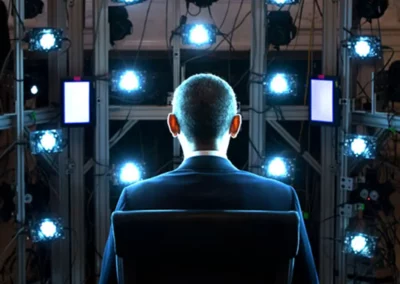
2008-2011ICT’s Star Wars-inspired 3D teleconferencing system projects a remote user as a moving hologram-like image that can converse and maintain direct eye contact with multiple users.
Learn more.
Ada and Grace: Responsive Virtual Human Museum Guides
2009-presentMeet Ada and Grace, virtual human museum guides who promote STEM education by answering questions, suggesting exhibits and explaining the technology that makes them work.
Learn more.
Army Excellence in Leadership
2003-2010AXL provided an engaging and memorable way to transfer tacit knowledge and develop critical thinking through case-method teaching, filmed storytelling and interactive training.
Learn more.
Bilateral Negotiation Trainer (BiLAT)
2004-2008ICT leveraged its virtual human and video game technologies to develop one of the first cultural/negotiation trainers. Transitioned for Army-wide training, BiLAT won a Modeling and Simulation Award and is available on the MilGaming website.
Learn more.
Coach Mike
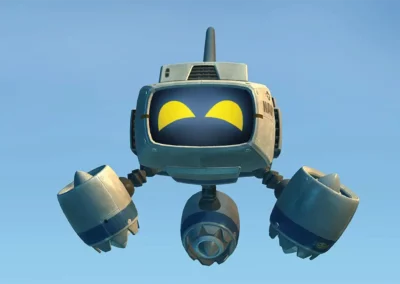
2010-presentCoach Mike is a virtual human who teaches people how to program a robot at the Boston Museum of Science. He’s part of an NSF-funded effort to help young visitors have fun learning about science.
Learn more.
Cognitive Air Defense Training System (CAD-TS) Engagement Control Station Simulation (ECS2)
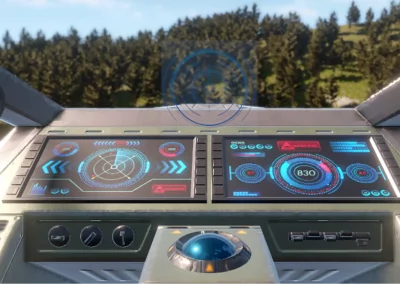
2006-2010This system, which transitioned to the Army in 2010, uses immersive media and learning sciences to train leaders in battle space visualization.
Learn more.
Combat Hunter Action and Observation Simulation (CHAOS)
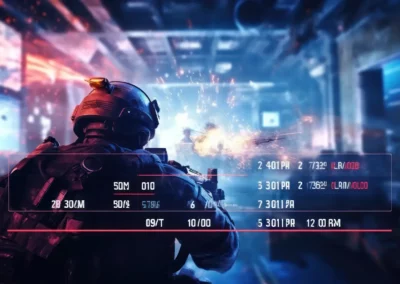
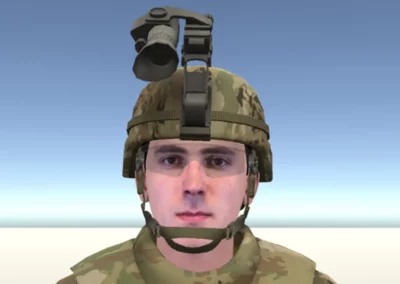
2010-2011ICT developed this vision of next-generation training for the Future Immersive Training Environment (FITE) Joint Capabilities Technology Demonstration (JCTD) at Camp Pendleton.
Learn more.
Cultural and Cognitive Combat Immersive Trainer (C3IT)
2006C3IT depicted placing soldiers in highly realistic, critical decision-making situations that required cultural awareness to make the best judgements.
Learn more.
Digital Emily
2008ICT and Image Metrics collaborated to achieve a photoreal digital actor. Critics hailed the collaboration as successful in crossing the “uncanny valley”.
Learn more.
Digital Ira
2012-presentIn this collaboration between Activision and USC ICT, we tried to create a real-time, photoreal digital human character which could be seen from any viewpoint, any lighting, and could perform realistically from video performance capture even in a tight closeup.
Learn more.
Disaster Response Training for Incident Command: TELL
2006-2008The DHS TELL program was designed to be a federated set of systems to facilitate the training and exercise of incident commanders of large-scale disasters.
Learn more.
Dismounted Interactive Counter-IED Environment for Training (DICE-T)
2011-presentDICE-T introduces, reinforces and assesses dismounted training concepts and principles by using narrative video and immersive gameplay.
Learn more.
Distribution Management Cognitive Training Initiative (DMCTI)
2006-2008DMCTI trains in understanding the Army distribution management process and logistics management systems. It transitioned to the Army and won a Modeling and Simulation Award.
Learn more.
Emergent Leader Immersive Training Environment (ELITE)
2010-presentELITE uses virtual humans for instruction, practice and assessment of interpersonal communication skills for leadership and counseling. It is currently used in classrooms at Fort Benning, Georgia.
Learn more.
FlatWorld
2001-2007FlatWorld combined Hollywood sets with real and virtual elements, creating an environment where users interacted with both the physical and virtual worlds, including virtual characters.
Learn more.
Flexible Action and Articulated Skeleton Toolkit (FAAST)
2010-presentFAAST facilitates integration of full-body control with games and VR applications. The toolkit tracks the user’s motion using the PrimeSensor or the Microsoft Kinect sensors.
Learn more.
Full Spectrum Video Games
2003-2005A suite of applications for military and commercial audiences that provide practice and training at the strategic, operational, and tactical levels.
Learn more.
Gunslinger
2007-presentCombines virtual humans technology with Hollywood storytelling and stagecraft, creating a mixed-reality experience where a single participant interacts with multiple virtual characters.
Learn more.
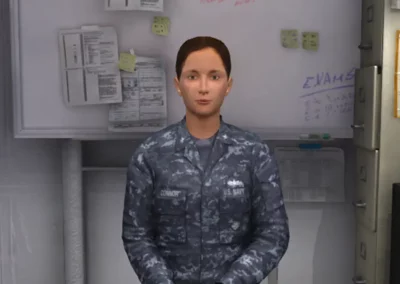
Immersive Naval Officer Training System (INOTS)
2010-presentThis interactive leadership-development tool is in use at the Navy’s Officer Training Command. INOTS may be the first example of a life-sized virtual human providing military classroom training.
Learn more.
Jewel Mine
2010-presentJewel Mine uses the Microsoft Kinect for Windows SDK to explore the potential of interactive games to improve therapy in home and clinical settings.
Learn more.
Joint Fires and Effects Training System (JFETS)
2003-2008JFETS is a suite of state-of-the-art immersive virtual reality environments designed to help soldiers make critical decisions under stress. Transitioned for Army training, the simulated system has prepared tens of thousands of service members for real world situations.
Learn more.
Light Stages
2001-presentICT Light Stages capture how actors appear when lit from every possible lighting direction. The system developers were recognized with an Academy Award for designing this technology that can create believable digital doubles down to the level of fine wrinkles and skin pores.
Learn more.
Low-Cost Immersive Viewer
2012-presentFOV2GO is a fold-out viewer that transforms smartphones into portable immersive virtual reality systems. Downloadable software allows users to create their own worlds or environments to display.
Learn more.
Military Terrain for Games Pipeline
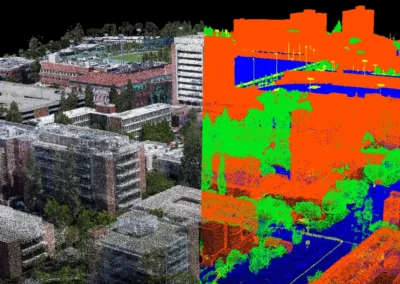
2008-presentA pipeline of automated processes and tools that analyze military terrain data, correct issues, enhance aesthetics, then export for use with the systems the military uses most.
Learn more.
Mobile Counter-IED Interactive Trainer (MCIT)
2009-presentMCIT provides counter-IED training via a narrative storyline, immersive environment and a live mutliplayer video game-based practice tool.
Learn more.
National Training Center: Comprehensive Enhanced Fidelity Program
2005-2007ICT assisted the National Training Center at Fort Irwin in the areas of storytelling, studio design, direction and production, set-design and special effects.
Learn more.
New Dimensions in Testimony
2012-presentDownload a PDF overview. New Dimensions in Testimony is an initiative to record and display testimony in a way that will continue the dialogue between …
Learn more.
OneSAF Graphical User Interface
2004-2005Building on ICT’s experience integrating military simulation with commercial rendering technologies, this project developed an intuitive, game-style interface for the OneSAF Objective System.
Learn more.
REFLCT: A Head Mounted Projector Display
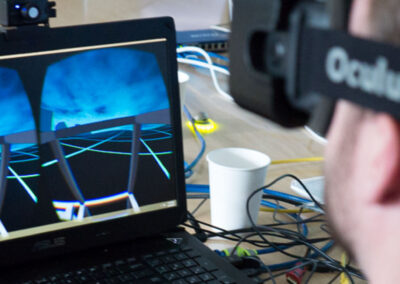
2011-presentREFLCT is a head-mounted projector system that personalizes projected imagery to allow each user to experience a perspective correct viewpoint.
Learn more.
Self-Directed Learning Internet Module — Every Soldier a Sensor Simulation
2004 – 2009SLIM-ES3 is a combat patrol training tool for US ground forces. It transitioned to the Army and won a Modeling and Simulation award.
Learn more.
Sensory Environments Evaluation
2001-2005This project developed methodologies for creating and utilizing emotionally affective virtual environments, including using integrated sensory cues, to provide more effective training.
Learn more.
Sergeant Blackwell
2004-2008An early example of an ICT life-sized 3D virtual character capable of conversation, Blackwell debuted at the 2004 Army Science Conference and was showcased in a Smithsonian Cooper-Hewitt exhibit.
Learn more.
Sergeant Star
2007-2009SGT Star is a life size virtual character who answers questions on topics including Army careers, training, education, money for college and the technology behind his development.
Learn more.
SimCoach
2009-presentSimCoaches are web-based virtual humans designed to assist service members, veterans and their family members in breaking down barriers to getting mental health support and in making better use of the myriad services that are available to them.
Learn more.
SimSensei
2011-presentSummary The University of Southern California Institute for Creative Technologies’ (ICT), pioneering efforts within DARPA’s Detection and Computational Analysis of Psychological Signals (DCAPS) project encompass …
Learn more.
SmartBody
2008-presentSmartBody is a character animation platform that provides locomotion, steering, object manipulation, lip syncing, gazing and nonverbal behavior in real time.
Learn more.
Stress Resilience in Virtual Environments (STRIVE)
2011-presentDownload a PDF overview. A New Path to Allostasis It is universally accepted that post-traumatic stress disorder (PTSD) resulting from OEF/OIF poses an unprecedented healthcare …
Learn more.
Stretching Space: Exploiting Change Blindness for Redirected Walking
2010-presentA VR system that is not confined by the size of a room. Using redirection techniques, it enables real walking through a virtual environment that is considerably larger than the physical space.
Learn more.
Transitional Online Post-Deployment Soldier Support in Virtual Worlds
2007-presentAlso called “Coming Home”, this project implements ICT’s intelligent virtual humans in an online virtual world to help returning troops reintegrate to civilian life.
Learn more.
UrbanSim
2006-presentUrbanSim is a game-based training software for practicing the art of mission command. It transitioned to the Army and can be downloaded from the MilGaming website.
Learn more.
Virtual Human Toolkit
2009-presentThe ICT Virtual Human Toolkit is a downloadable collection of modules, tools and libraries that allows users, authors and developers to create their own virtual humans.
Learn more.
Virtual NICoE
2011-presentVirtual NICoE is a virtual version of the National Intrepid Center of Excellence that houses resources for patients to use during and after their stay at NICoE.
Learn more.
Virtual Patient
2006-presentThe Virtual Patient project uses virtual human technology to create realistic lifelike character avatars to train clinicians in interpersonal areas such as rapport, interviewing and diagnosis.
Learn more.
Virtual Reality Cognitive Performance Assessment Test (VRCPAT)
2006-presentVRCPAT incorporates cutting-edge neuropsychological and psychological assessment into state of the art interactive/adaptive virtual scenarios.
Learn more.
Virtual Reality Exposure Therapy
2005-presentIn use across the country, this project provides relief from PTS through virtual reality exposure therapy. Patients, with the help of clinicians, confront their trauma memories in a virtual world.
Learn more.